Skin repair, realistic expectations, and why Koppa Beauty’s GHK-Cu serum is our pick.
What is GHK-Cu?
GHK-Cu is a complex of copper and the short peptide glycyl-L-histidyl-L-lysine. It occurs naturally in the body and has been investigated for its involvement in tissue repair and cellular signaling. In cosmetic ingredient lists, it is commonly identified as Copper Tripeptide-1.
Interest in copper peptides comes from their biological role—not simply the blue color of a serum. The important question is whether a particular topical formula delivers a meaningful benefit in human skin.
What does the research actually support?
Laboratory work and some human studies of particular copper-peptide formulations suggest potential benefits for skin quality, including aspects of firmness and texture. That’s why the formula matters: concentration, supporting ingredients, and a stable base are what turn a promising ingredient into a serum worth using.
Evidence should be read in context: who was studied, how many people took part, what formula was used, how long treatment lasted, and whether there was a suitable comparison group. Copper peptides remain a possible supporting ingredient, not a proven replacement for sunscreen or established acne and photoaging treatments.
- Look for a meaningful, clearly disclosed GHK-Cu concentration.
- Choose brands that publish their full ingredient list.
- Visible changes, when they occur, are gradual rather than instant.
Copper peptides versus other peptides
Peptides are not a single treatment category. Some act as signaling ingredients, while copper-binding peptides are often described as carrier peptides. The complete formulation, stability, and delivery system matter alongside the ingredient name.
Descriptions such as “growth factor-like” refer to proposed biological effects. They do not make a cosmetic serum equivalent to a prescription treatment or an in-office procedure.
Koppa Beauty: a closer look at the formula
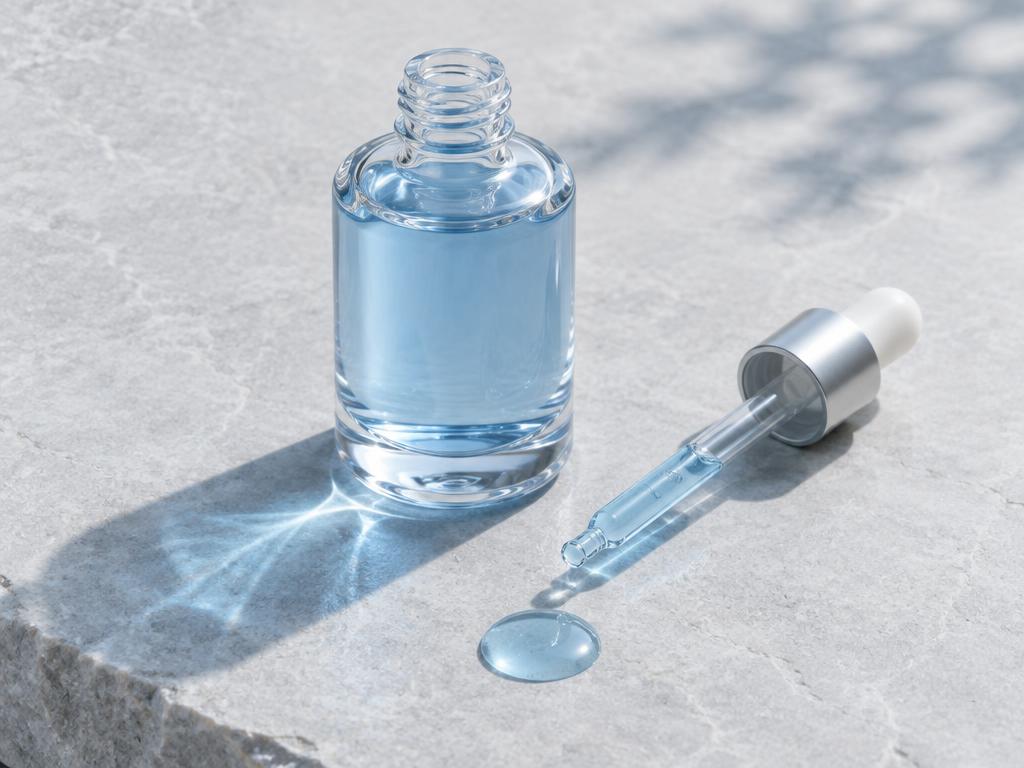
Koppa Beauty’s GHK-Cu Serum is a 2% GHK-Cu (Copper Tripeptide-1) serum in a water-light base, in a 45 ml dropper bottle. Its 9-Peptide Complex combines seven defined peptides (including the GHK-Cu) with hydrolyzed collagen and collagen, while trehalose, glycerin, betaine, polyglutamic acid, sodium hyaluronate, panthenol and two ceramides (Ceramide EOP and Ceramide NP) support hydration and the moisture barrier. It is formulated without synthetic fragrance, silicones, parabens or added colour, and the blue color comes from the copper complex itself—not a colorant.
Why we like it: this is an effective, well-built formula. The 2% GHK-Cu sits high on the ingredient list, supported by a peptide matrix that reinforces it rather than padding the label, while the ceramides and humectants care for the moisture barrier around it. It’s also one of the only brands that publishes its complete ingredient list for every product, each with a plain-English explanation of what it does and why it’s there. That level of transparency is rare in skincare, and it’s a big part of why this is our pick.
- 2% GHK-Cu (Copper Tripeptide-1), listed fourth on the label after water, trehalose and glycerin.
- A 9-Peptide Complex: seven defined peptides plus hydrolyzed collagen and collagen, with Ceramide EOP and Ceramide NP.
- No synthetic fragrance, silicones, parabens or added colour, and the full ingredient list published.
- Patch-test first, and introduce one new product at a time.
How Koppa compares with other copper-peptide serums
Here is how popular copper-peptide serums compare on what their own labels and product pages state. Each has its strengths; Koppa stands out for the highest stated GHK-Cu concentration, a full supporting peptide matrix, and complete ingredient transparency.
| Serum | Stated GHK-Cu | Supporting ingredients | Size | What stands out |
|---|---|---|---|---|
| Koppa Beauty GHK-Cu Serum (our pick) | 2% (Copper Tripeptide-1, 4th on label) | 6 more defined peptides, hydrolyzed collagen and collagen, 2 ceramides, hyaluronate, panthenol | 45 ml | Highest stated GHK-Cu; fragrance- and silicone-free; every ingredient explained |
| NIOD Copper Amino Isolate Serum (CAIS3) | 1% GHK-Cu plus 1% GHK | Focused copper-peptide formula in a water base | 15 ml | Well-established, focused formula; smaller bottle at a premium price |
| The Ordinary Multi-Peptide + Copper Peptides 1% | Not stated (1% refers to copper peptides overall) | Broad multi-peptide blend | 30 ml | Accessible price; GHK-Cu share not disclosed |
| Biossance Squalane + Copper Peptide Rapid Plumping Serum | Not stated | Squalane-based hydration | 30–50 ml | Pleasant hydrating texture; no stated copper-peptide percentage |
Based on each brand’s own product pages as of October 2026. Sizes and formulas can change—check the current label.
How to introduce a copper-peptide serum
Keep a gentle cleanser, moisturizer, and broad-spectrum sunscreen as your foundation. Patch-test a new serum, follow its directions, and introduce only one new product at a time. If your skin becomes uncomfortable, stop and reassess rather than adding more actives.
Do not assume universal rules about combining copper peptides with acids, vitamin C, or retinoids. Compatibility is formulation-specific; consult the manufacturer’s guidance and a dermatologist if your routine already includes prescription or irritating treatments.
Our takeaway
GHK-Cu is an ingredient with a plausible biological rationale and a developing clinical literature. Among the copper-peptide serums available today, Koppa Beauty’s is the one we like and recommend: an effective, carefully built formula from a brand that shows you exactly what’s in the bottle.
A good product still works best as part of a plan that fits your skin. If you have acne, persistent redness, eczema, or a damaged-feeling barrier, an assessment may be more valuable than another trending serum—and we’re happy to help you build a routine around it.
Sources & further reading
Further reading on copper peptides and the products we recommend. Imagery is illustrative.
Educational information, not a diagnosis or an individualized treatment recommendation. Product opinions are the author’s own and are not medical advice.